


Your style is the architecture of your day. On this particular day, the goal is to architect an environment of levity and rapport. A well-chosen costume is not a frivolous act; it is a strategic tool.
It is about building a functional and appropriate uniform that supports the day’s objective. The right composition can become a framework for conversation, shared laughter, and a stronger classroom community. It must be clever, comfortable, and above all, effective.
Defining the Parameters: Key Questions for Your Costume Brief
Before any components are selected, a clear brief is essential. This strategic pause ensures your final composition is not only aesthetically sound but also perfectly suited to its environment and purpose.
- What are the established guidelines? Reviewing the school’s official costume policy is the foundational first step. Understand the structural limits regarding masks, props, or specific themes.
- Who is the intended audience? The design must resonate with its end user. A literary reference for high schoolers has a different set of requirements than a picture book character for first graders.
- What is your capacity for execution? An honest assessment of your time, resources, and personal comfort is critical. Will this be a simple composition of existing pieces or a more elaborate construction?
- Can the design integrate with the curriculum? The most effective designs serve multiple functions. A costume that connects to your subject matter adds a layer of educational integrity to the day.
Answering these questions provides the necessary blueprint for a costume that is intelligent, functional, and intentional.
The Foundational Principles of Teacher Costumes
A successful composition adheres to a few core principles. These are the non-negotiables, the structural supports that ensure the entire endeavor is a success.
- Principle 1: Prioritize Function and Mobility. A teacher is in constant motion. The design must accommodate this. Any costume that restricts movement, overheats the wearer, or proves cumbersome has failed its primary functional test.
- Principle 2: Ensure Immediate Readability. The objective is connection, which requires a recognizable concept. The most effective designs are positive, inspiring, or humorous, creating an instant, shared frame of reference.
- Principle 3: Maintain Environmental Appropriateness. The costume must exist harmoniously within the school setting. Avoid any elements that could be perceived as frightening, controversial, or overly complex. The architecture of a school Halloween should be built on fun, not fear.
The most successful teacher costumes follow a simple formula: Recognizable Concept + Unrestricted Comfort + Purposeful Connection. This framework ensures the day is memorable for all the right reasons.
The Curated Edit: 10 Effective Costume Compositions
Here is my definitive edit of ten costume concepts that form the blueprint for a successful and engaging Halloween in the classroom. Each piece is chosen for its ability to balance a playful aesthetic with the functional demands of a school day.
1. Ms. Frizzle: The Adventurous Educator
This look is a direct homage to the spirit of immersive education. It is the uniform of a curious, hands-on intellectual.

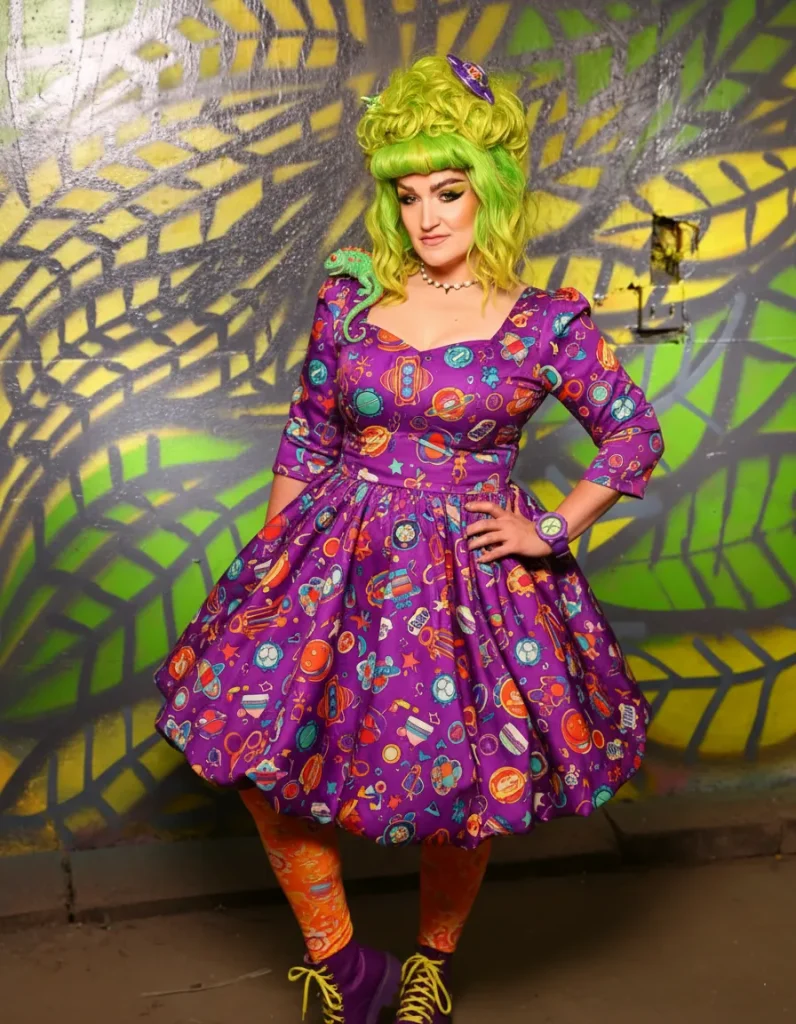
- The Composition: A simple dress silhouette serves as the canvas. The pattern, whether planetary or biological, is the focal point. Key accessories include unruly red hair and a small lizard figure perched on the shoulder.
- Optimal Context: Elementary and Middle School science classrooms.
- Assembling the Components: Source a simple blue dress. Apply the thematic pattern using felt cutouts or fabric paint for a clean, graphic effect.
- Functional Purpose: The costume is an immediate conversation starter about science and exploration. The simple query, “Class, where will the Magic School Bus take us?” perfectly frames the day’s lesson.
- Practical Specifications: Based on a standard dress, the design allows for complete freedom of movement. It is a visual celebration of the very act of learning.
2. Pete the Cat: Cool, Calm, and Collected
This composition embodies an aesthetic of effortless cool. It is a minimalist tribute to a beloved literary character.

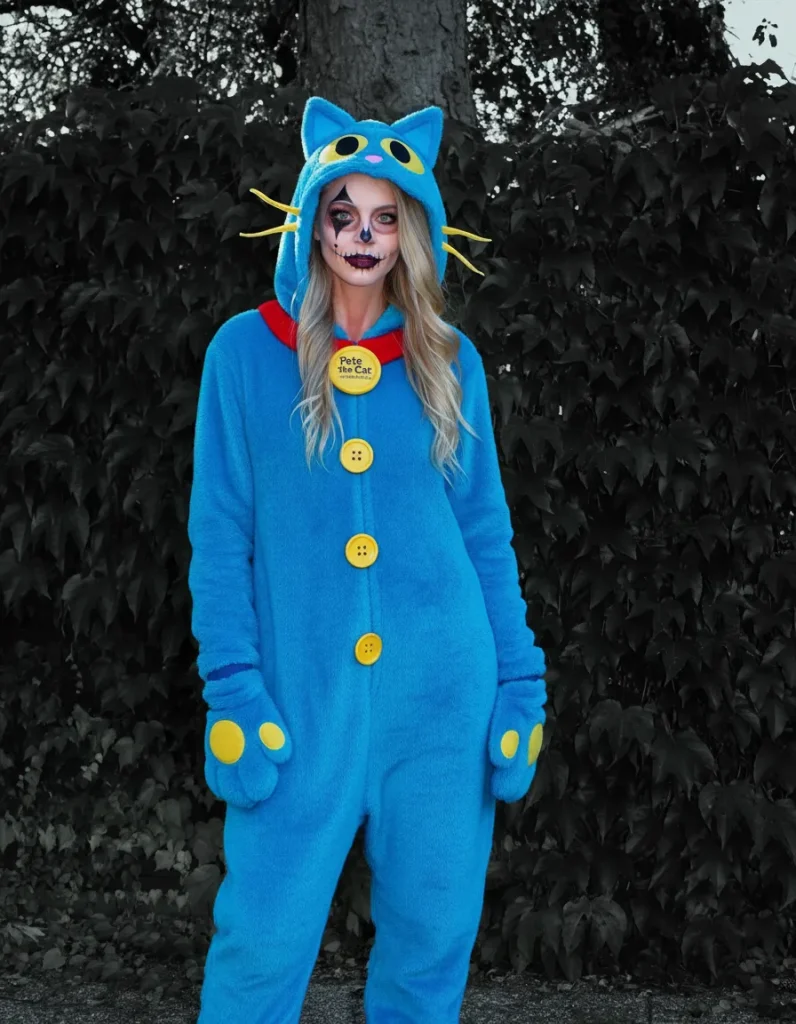
- The Composition: A clean-lined yellow collared shirt paired with blue trousers and red footwear. The essential details are cat ears and simple, graphic whiskers.
- Optimal Context: Pre-K and Elementary School classrooms.
- Assembling the Components: This look is an exercise in editing, assembled from wardrobe basics. A touch of face paint for the nose and whiskers completes the composition.
- Functional Purpose: The character is instantly recognizable to young students, creating a shared, positive association. Referencing his signature phrases builds immediate rapport.
- Practical Specifications: This is essentially a comfortable, everyday outfit with minimal accessories. It offers maximum mobility for a demanding school day.
3. A Human Crayon: Bright and Collaborative
A bold, graphic statement that works beautifully as a solo piece or as a series for a group. It celebrates color and creativity.

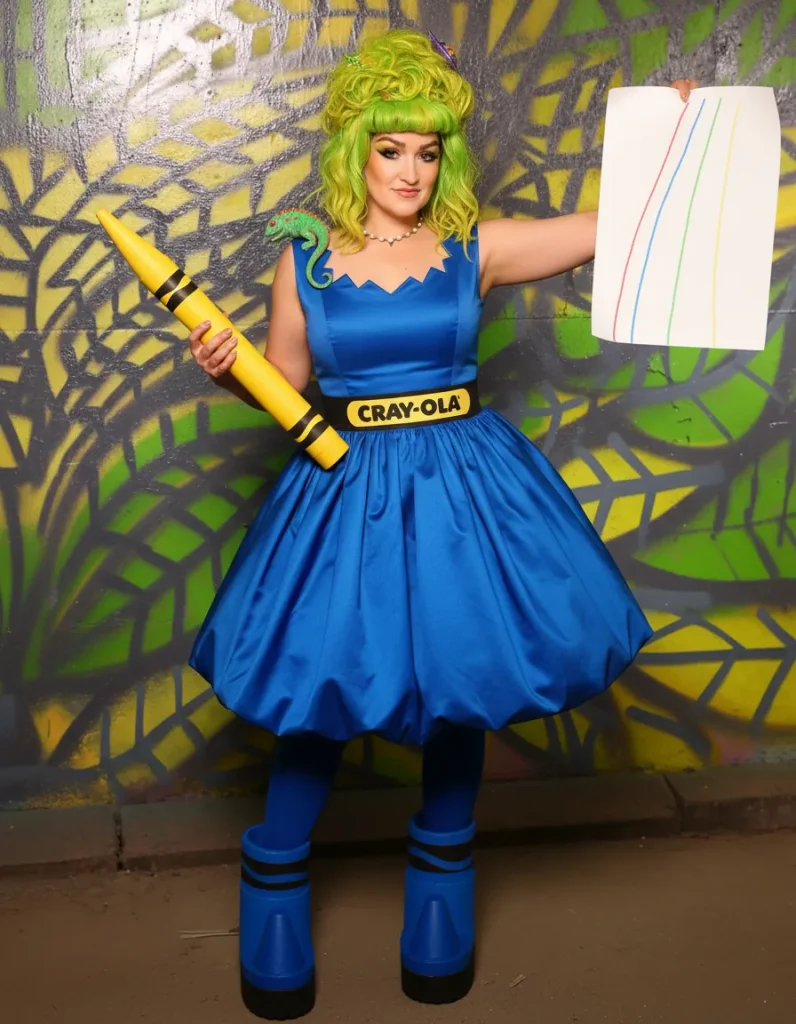
- The Composition: A monochromatic base of a t-shirt and trousers. The classic “Crayola” typography, rendered in black, provides the key graphic element. A matching paper cone hat creates a strong vertical line.
- Optimal Context: Elementary School, particularly for art teachers or collaborative teaching teams.
- Assembling the Components: Apply black felt lettering to a solid-colored t-shirt. The power of this look lies in its color-blocking and simple geometric forms.
- Functional Purpose: The costume is a visual metaphor for creativity and teamwork. As a group, it creates a striking, unified visual statement.
- Practical Specifications: The design is supremely functional. It is constructed from comfortable basics, allowing for complete ease of movement.
4. Where’s Waldo?: The Elusive Observer
This is a classic, interactive design. The costume itself is a catalyst for engagement and play.

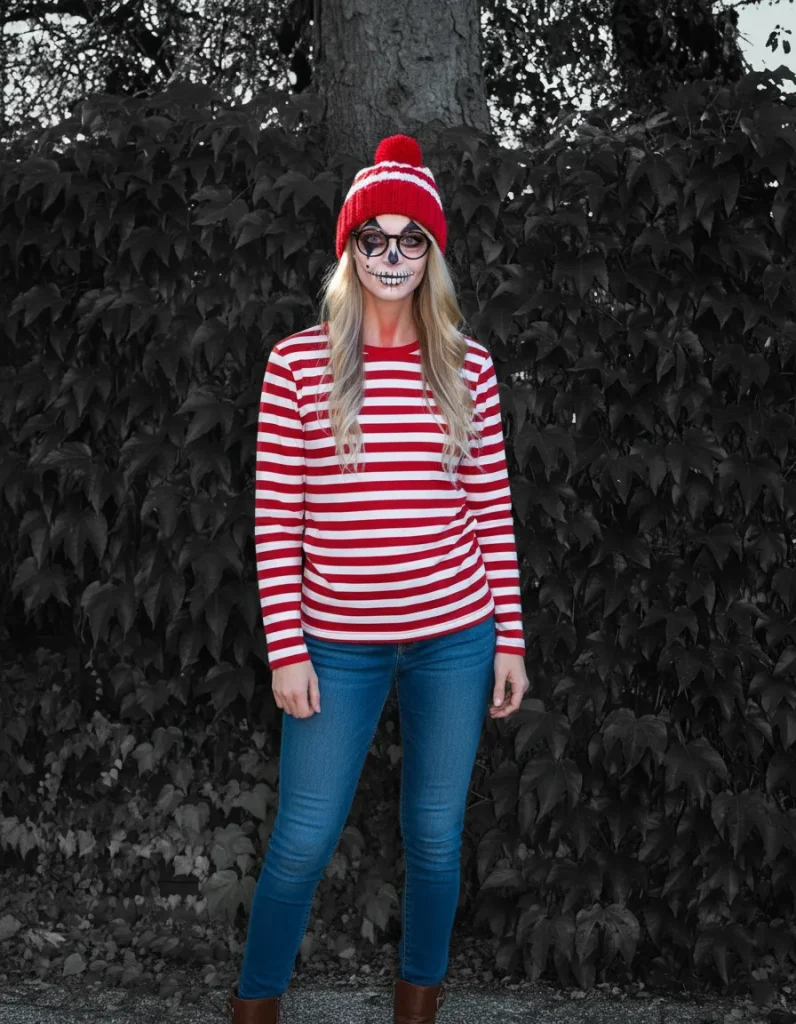
- The Composition: The core elements are a red-and-white striped knit shirt and a matching beanie. Round glasses and simple blue denim ground the look.
- Optimal Context: Universal appeal across all grade levels.
- Assembling the Components: The striped shirt is the foundational piece. The other elements are common basics, making this a highly accessible design.
- Functional Purpose: The character’s entire purpose is to be found. This provides a built-in interactive element for the day, creating moments of play and discovery.
- Practical Specifications: The outfit is, by design, just comfortable clothing. It is one of the most practical and functional options for a full day of teaching.
5. Bob Ross: The Happy Little Artist
This costume channels a specific, calming energy. It is a tribute to the quiet confidence of a creative master.

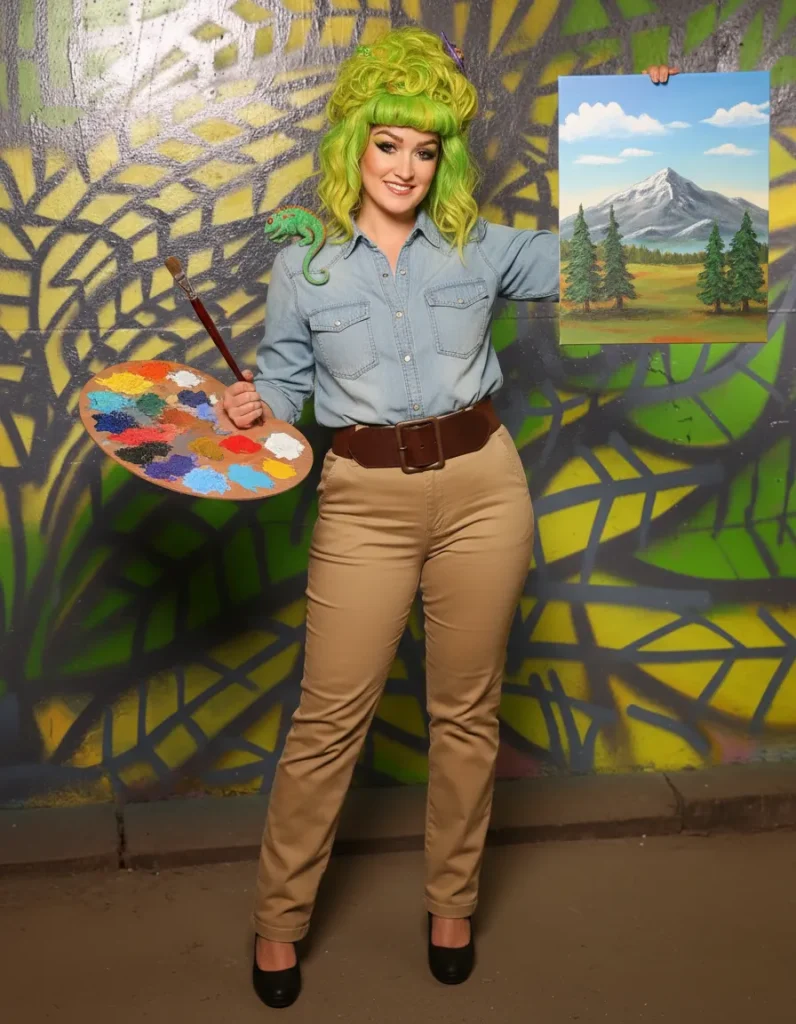
- The Composition: A light blue button-down shirt tucked into classic denim. The look is defined by the signature curly brown wig and beard. A painter’s palette and brush serve as purposeful props.
- Optimal Context: Middle School, High School, and Art classrooms.
- Assembling the Components: The wig and beard are the key investment pieces. The clothing is straightforward. A palette cut from cardboard is a lightweight, effective accessory.
- Functional Purpose: The character embodies a philosophy of gentle encouragement. Referencing his “happy little accidents” provides a framework for discussing mindset and resilience.
- Practical Specifications: The outfit is comfortable and the props are not cumbersome. The entire composition projects a positive and calming message.
6. A Character from Inside Out: Emotionally Intelligent Fun
A colorful and conceptually brilliant choice. Each costume is a clear visual representation of a core human emotion.

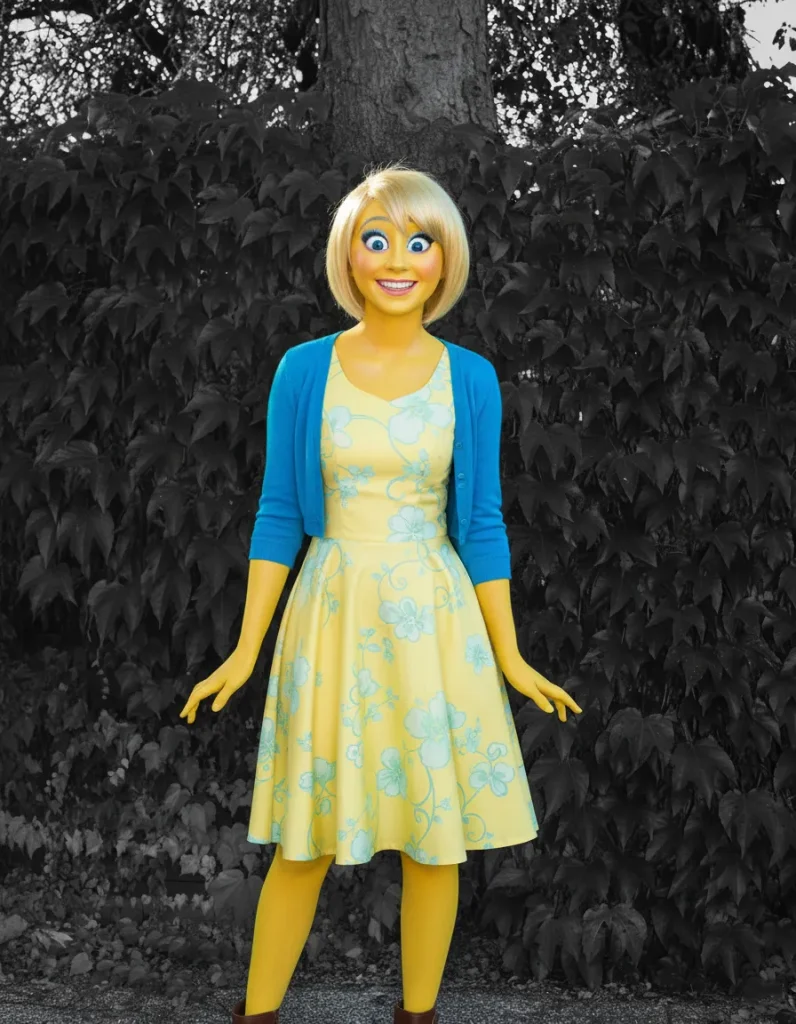
- The Composition: Each design is built around a specific color story. Joy requires a simple yellow dress. Sadness is composed of a blue chunky-knit sweater and round glasses.
- Optimal Context: Elementary, Middle School, and for School Counselors.
- Assembling the Components: Select an emotion. The key is a disciplined adherence to the color palette, executed through basic clothing items and a colored wig.
- Functional Purpose: This costume provides a perfect visual entry point for discussions about social-emotional learning. It makes an abstract concept tangible and approachable.
- Practical Specifications: The designs are based on standard clothing items, ensuring comfort and mobility. It is a smart, functional choice for lessons on emotional intelligence.
7. Rosie the Riveter: The Empowering Icon
A powerful and efficient design. This costume communicates a message of strength and capability with minimal components.

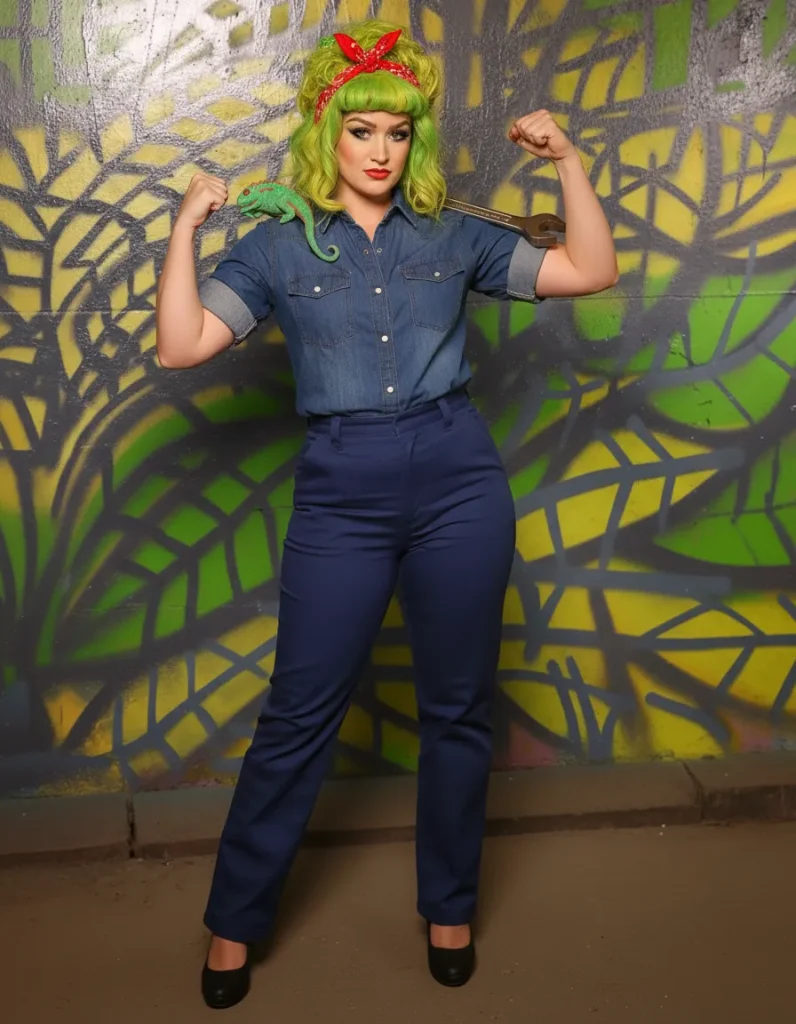
- The Composition: A blue denim or chambray work shirt paired with dark jeans. The iconic element is the red polka-dot bandana securing the hair.
- Optimal Context: Appropriate for all grade levels; particularly resonant for History or Social Studies.
- Assembling the Components: This is the ultimate curated look from existing closet staples. The bandana is the only specialized piece required.
- Functional Purpose: The “We Can Do It!” slogan serves as a powerful theme for the day, perfect for motivating students through challenging tasks.
- Practical Specifications: It is a comfortable, practical work uniform. The costume’s message of empowerment is built directly into its functional design.
8. Bill Nye the Science Guy: The Enthusiastic Scientist
This look is the quintessential uniform of a beloved science communicator. It is professional, recognizable, and carries an inherent coolness.

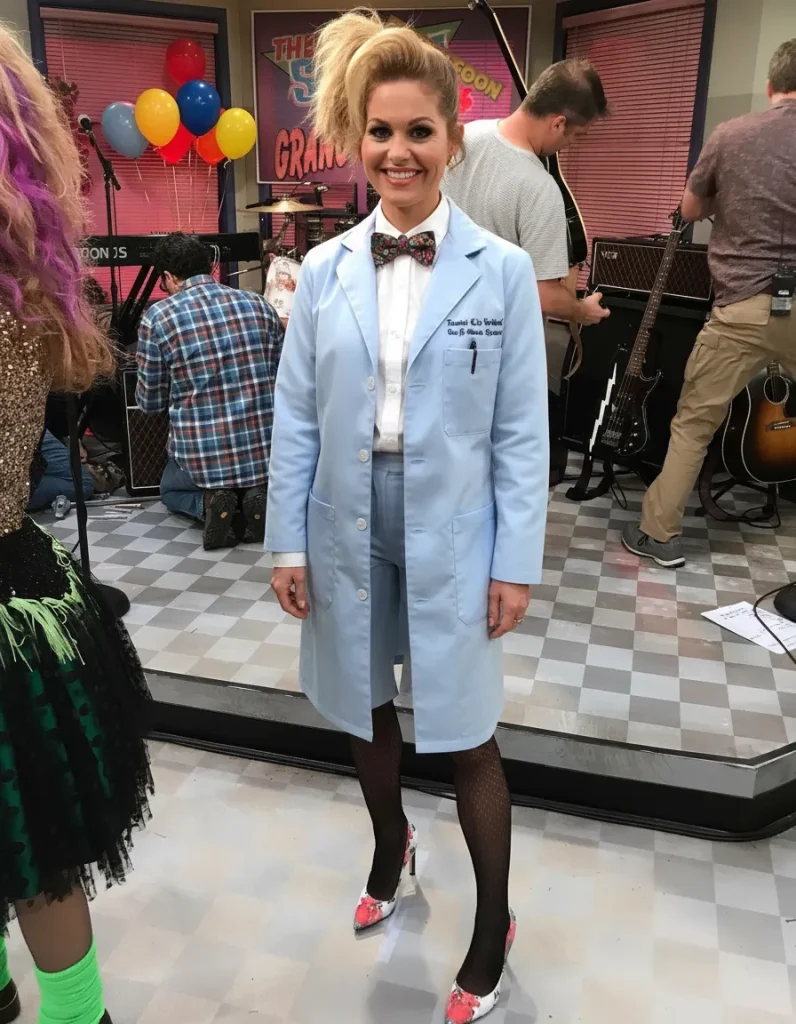
- The Composition: A clean, light blue lab coat over a collared shirt. The defining accessory is a classic bowtie. The look is academic yet playful.
- Optimal Context: Middle and High School science classrooms.
- Assembling the Components: A lab coat and a bowtie are the only two items needed to construct this iconic look.
- Functional Purpose: The character is synonymous with making science accessible and exciting. His signature chant is an immediate tool for creating energy and participation.
- Practical Specifications: The lab coat is a functional garment with pockets. The entire look is polished and completely non-restrictive, perfect for classroom demonstrations.
9. The Very Hungry Caterpillar: A Nostalgic Throwback
A charming and imaginative composition that references a cornerstone of children’s literature.

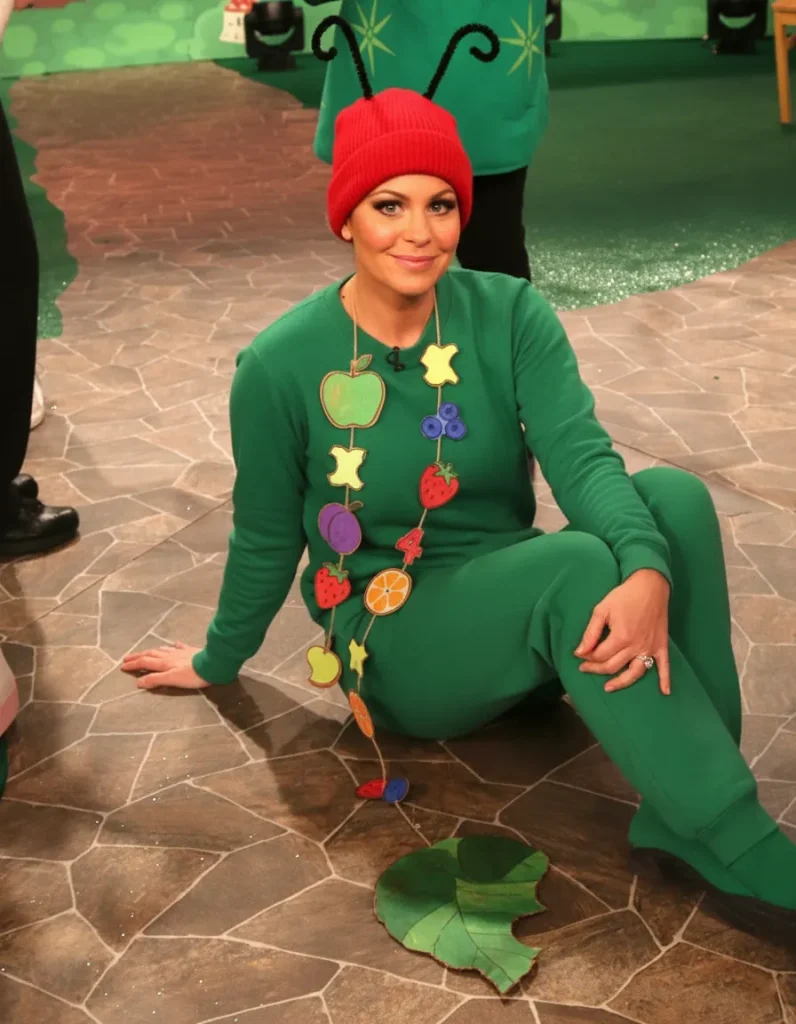
- The Composition: A monochromatic green base. A red beanie fitted with simple pipe-cleaner antennae. The narrative element is a string of cardboard food items worn as a garland.
- Optimal Context: Pre-K, Kindergarten, and 1st Grade.
- Assembling the Components: The design relies on simple craft materials. The effectiveness is in the storytelling created by the necklace of “eaten” foods.
- Functional Purpose: The costume transforms storytime into an immersive experience. It prompts conversation and imagination from the youngest learners.
- Practical Specifications: The base of the costume is comfortable clothing. The signature prop is a lightweight necklace that does not impede movement.
10. A Punny Costume: The Clever Comedian
This approach is an intellectual exercise in visual wordplay. It showcases wit and creativity through simple, graphic means.


- The Composition: Varies by concept. A name tag reading “Life” while handing out lemons. A spice rack affixed to a shirt to become a “Spice Girl.”
- Optimal Context: Upper Elementary, Middle, and High School, where the wordplay will be understood and appreciated.
- Assembling the Components: The beauty of this design is its resourcefulness. Most concepts can be executed with household items and a simple t-shirt.
- Functional Purpose: The moment a student deciphers the pun is a moment of shared intellectual discovery and humor. It is a highly effective icebreaker.
- Practical Specifications: These costumes are, by nature, minimalist and comfortable. They prioritize the cleverness of the idea over elaborate construction.
Conclusion: A Curated Approach to Connection
Selecting a teacher costume is an exercise in thoughtful design. It is an opportunity to structure your interactions for the day, using your wardrobe as a functional tool for connection.
By choosing a versatile, intelligent, and well-executed concept, you build a framework that supports a day of fun, community, and shared experience. Use this edit as a blueprint to architect your own perfect composition, and enjoy the positive, engaging environment you have intentionally built.